Part 1A: Introduction
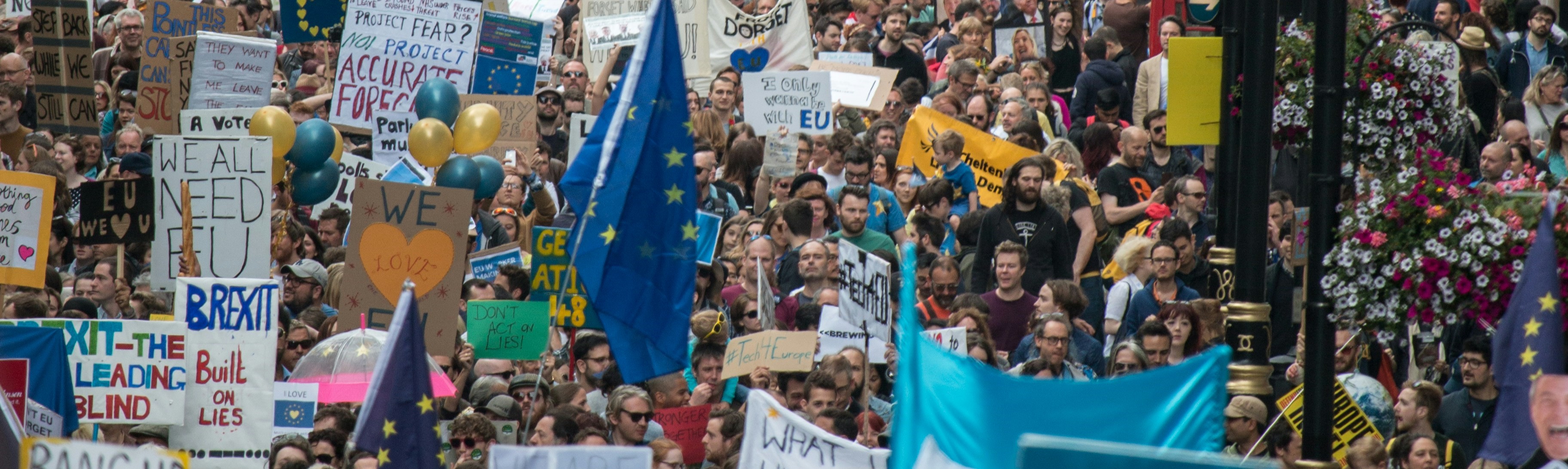
"Brexit"-- the conjoining of two English words, 'Britain' and 'exit', captures the withdrawal process of the United Kingdom (UK) from the European Union (EU). One key feature of this withdrawal process is Article 50 of the Treaty of the European Union signed by all the EU member states upon joining the union. This treaty enables EU member states to negotiate the terms and conditions of withdrawal. On June 23, 2016, the UK held a referendum, and on March 29, 2017, the UK notified the EU of its decision to leave. The UK's withdrawal from the European Union occurred on February 1st 2020, but the withdrawal agreement did not fully materialize until December 31s , 2020. On January 1st 2021, relations between the UK and the EU became dictated by the "Trade and Cooperation Agreement" which carried significant changes and implications for citizens and businesses on both sides of the English channel.
The British Election Study (BES) is a series of instruments which include the same survey respondents over time and examines the political preferences towards Brexit. These data can also be used cross-sectionally, as it allows for filtering out who has participated in all, some, or just one of the waves. Panel Study Data are particularly useful to measure change over time and within person changes. For the purpose of this analysis, however, these data are used to make assessments of people's political preferences towards Brexit in a longitudinal, cross-sectional manner.
Brexit preferences are measured as the weighted proportion of individuals surveyed in at least one wave stating their preference to "stay in" or "leave" the EU. Thus, we are able to describe the proportion of individuals and the fluctuations over time regarding the support for Brexit and the future of the UK in relation to the rest of Europe. Five basic exploratory claims are made using the BES data: 1) Support towards Brexit is increased over time in the context of England, remained the same in Wales, and decreased in Scotland; 2) Elder individuals are more likely to support Brexit than younger individuals; 3) Gender differences are consistent over time (males are more likely to support Brexit than female respondents); 4) Political party preferences are strongly associated with pro (or against) Brexit positions, based on (conservative/liberal political leanings and pro/against Scotish independence); and 5) Being married seems to be associated with pro-brexit preferences. Using the interactive tool below and using BES data, we explore these claims.